
When I sold my house last year, I thought the hard part was over once we accepted an offer. Little did I know that everything between accepting that offer and actually moving out would be just as important as the selling process itself. Whether you're selling a home in Wichita, Augusta, or anywhere throughout South Central Kansas, understanding what happens after you say "yes" to a buyer can make your transition smoother and help you avoid costly surprises. This guide walks you through the essential steps, financial considerations, and practical tips for navigating life after your sale closes.
Understanding the Timeline After Accepting an Offer
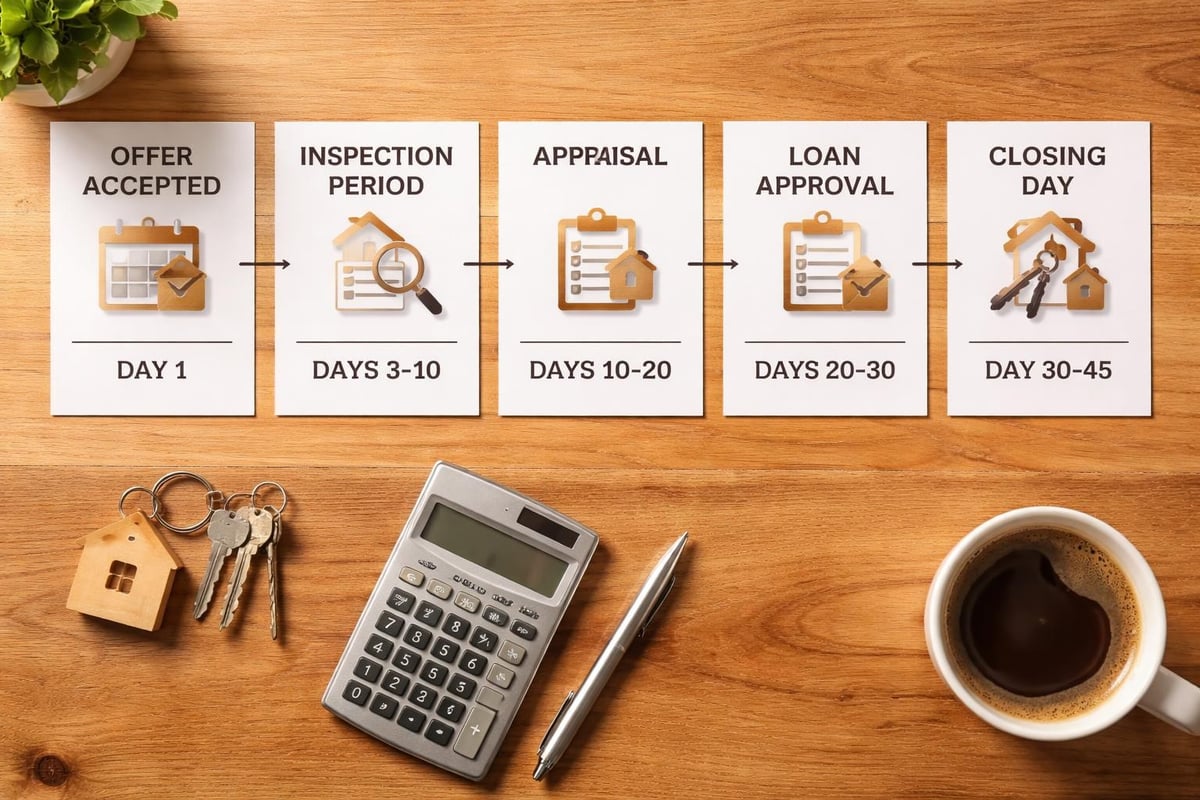
The moment you accept an offer on your property, you're entering a critical phase that typically lasts 30 to 45 days. This period involves inspections, appraisals, and finalizing financing for your buyer.
During this time, you'll need to stay actively involved even though the heavy lifting of marketing and showing your home is complete. Your realtor becomes your coordinator, managing communication between you, the buyer's agent, the title company, and various inspectors.
Key Milestones to Track
Once i sold my house, I learned to pay close attention to several important deadlines:
- Home inspection period (usually 7-10 days after acceptance)
- Appraisal completion (typically 10-14 days)
- Loan approval contingency (often 21-30 days)
- Final walk-through (24-48 hours before closing)
- Closing day (the date specified in your contract)
Missing any of these deadlines can delay your closing or even jeopardize the sale. Your realtor should provide you with a comprehensive timeline that outlines every critical date and what's expected from you.
Navigating the Inspection and Negotiation Phase
Home inspections often reveal issues you didn't know existed. When i sold my house, the inspection report came back with a dozen items ranging from minor to moderate concerns.
This doesn't mean your sale is falling apart. Most buyers expect to find something during inspection, and most sellers expect to negotiate repairs or credits.
How to Handle Inspection Requests
You have several options when buyers request repairs based on inspection findings:
- Make the repairs yourself before closing
- Offer a credit at closing for the buyer to handle repairs
- Reduce the sale price to account for needed work
- Stand firm if requests seem unreasonable
- Meet somewhere in the middle with selective repairs
The process for selling a house involves careful negotiation during this phase, and having an experienced realtor helps tremendously. They can advise you on which requests are reasonable based on local market conditions and comparable sales.
| Request Type | Typical Seller Response | Impact on Timeline |
|---|---|---|
| Safety issues (electrical, structural) | Usually addressed | May add 1-2 weeks |
| Major systems (HVAC, roof) | Often negotiated as credit | Minimal delay |
| Cosmetic items | Rarely addressed | No impact |
| Minor repairs under $500 | Case-by-case | No impact |
Managing the Financial Side of Your Sale
Understanding the costs associated with selling a house prevents shock at the closing table. When i sold my house, I was prepared for these expenses because my realtor walked me through every line item ahead of time.
Typical Seller Costs at Closing
Your closing costs typically range from 8% to 10% of your home's sale price. Here's where that money goes:
- Real estate commissions (usually 5-6% of sale price, split between agents)
- Title insurance and settlement fees (varies by location and sale price)
- Transfer taxes (depends on your local jurisdiction)
- Prorated property taxes (your portion through closing day)
- HOA fees (if applicable, prorated through closing)
- Outstanding mortgage payoff (including any prepayment penalties)
- Recording fees and document preparation
Beyond closing costs, you might also have moving expenses, temporary housing costs if your timing doesn't align perfectly, and repairs or improvements you agreed to during negotiations.
Tax Implications You Need to Know
One of the biggest questions after selling is about tax implications for selling your home. The good news is that many homeowners qualify for significant tax exclusions.

Capital Gains Exclusion Rules
If you've lived in your home as your primary residence for at least two of the past five years, you may exclude up to $250,000 in gains if you're single, or $500,000 if you're married filing jointly. This is one of the most generous tax benefits in the tax code.
When i sold my house, calculating my actual gain required understanding my cost basis, which includes:
- Original purchase price
- Closing costs from when you bought
- Capital improvements (not regular maintenance)
- Selling expenses
The tax considerations when you’ve sold your home become more complex if you've used part of your home for business, rented it out, or owned it for many years with significant appreciation.
Special Situations That Affect Taxes
Some circumstances create different tax scenarios:
Investment properties: You'll owe capital gains tax on profits and may face depreciation recapture if you've claimed rental depreciation.
Inherited homes: Selling an inherited home often involves a "step-up" in basis to the fair market value at the date of the previous owner's death, potentially reducing or eliminating capital gains.
Quick sales: If you don't meet the two-year residency requirement, you might still qualify for a partial exclusion due to work relocation, health issues, or unforeseen circumstances.
| Filing Status | Capital Gains Exclusion | Residency Requirement | Frequency Limit |
|---|---|---|---|
| Single | Up to $250,000 | 2 of past 5 years | Once every 2 years |
| Married filing jointly | Up to $500,000 | 2 of past 5 years | Once every 2 years |
| Partial exclusion | Prorated amount | Less than 2 years | Special circumstances only |
Preparing for Closing Day
The week before closing is busy. After i sold my house, I created a checklist to ensure nothing fell through the cracks during those final days.
Your Pre-Closing Checklist
Make sure you complete these tasks before closing day:
- Schedule your final walk-through with the buyer (usually 24 hours before closing)
- Complete any agreed-upon repairs and save receipts
- Arrange for utilities to be transferred or shut off after closing
- Gather all keys, garage door openers, gate codes, and access devices
- Collect manuals, warranties, and documentation for appliances and systems
- Remove all personal belongings and ensure the house is "broom clean"
- Verify your closing date, time, and location
- Review your estimated closing statement (HUD-1 or Closing Disclosure)
- Bring photo ID and any required documents to closing
- Arrange for your moving company or truck rental
The final walk-through gives buyers one last chance to verify that the property is in the agreed-upon condition. They'll check that repairs were made, nothing was damaged, and items included in the sale (like appliances) are still present.
What Happens at the Closing Table
Closing day is when ownership officially transfers. When i sold my house, the actual closing appointment took about an hour, though it can vary.
You'll meet with the closing agent (often at a title company office) to sign numerous documents. Your buyer might be there too, or you might sign at different times.
Documents You'll Sign as a Seller
Expect to sign these key documents:
- Deed: Transfers property ownership to the buyer
- Bill of Sale: Transfers personal property included in the sale
- Affidavit of Title: Confirms you have clear title to transfer
- Closing Disclosure: Itemizes all financial transactions
- FIRPTA Affidavit: States you're a U.S. citizen or resident (for tax purposes)
- Transfer tax declarations: Required by local jurisdictions
Read everything carefully before signing, even though there's a lot of paperwork. If something doesn't match your understanding, speak up immediately.
Receiving Your Proceeds
After all documents are signed and recorded, you'll receive your proceeds. The timing and method vary based on your closing agent and local practices.
When i sold my house in Kansas, I received my proceeds via wire transfer within a few hours of closing. Some sellers receive a check at closing, while others wait 24-48 hours for funds to clear.
Understanding Your Closing Statement
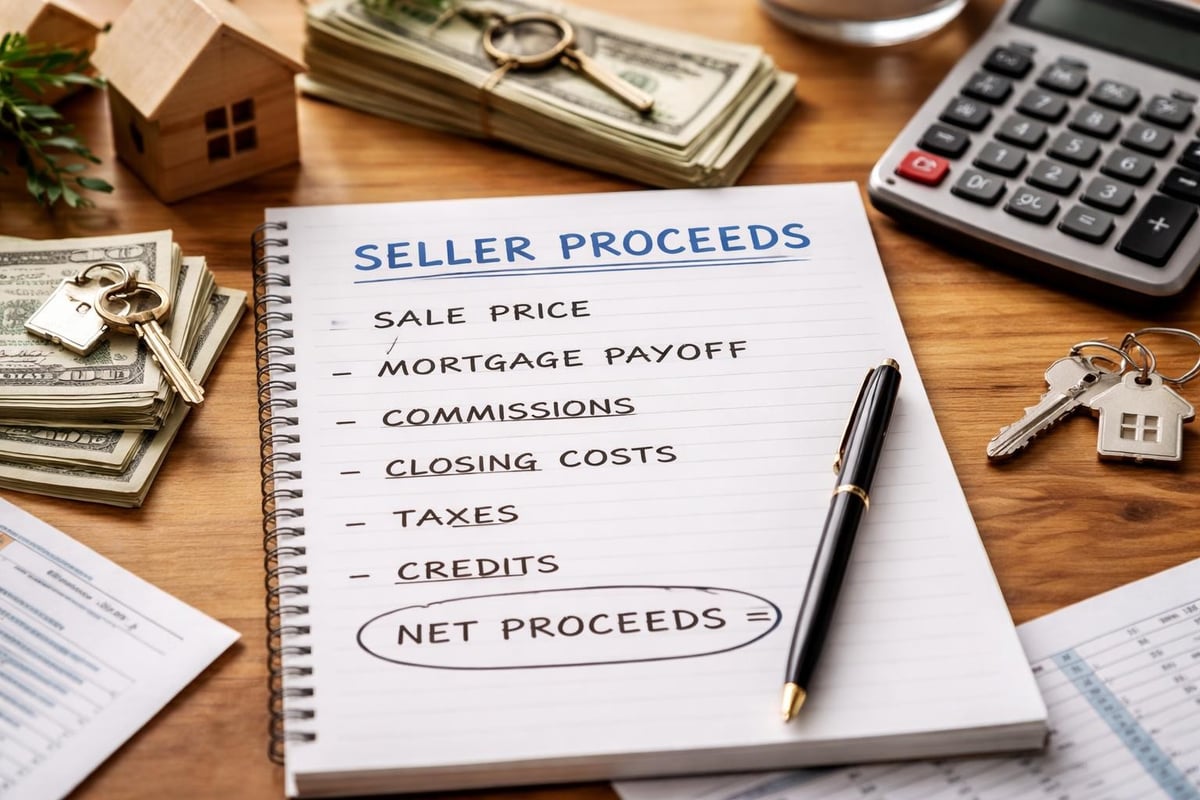
Your closing statement shows exactly where every dollar went:
- Sale price (credit to you)
- Minus: Outstanding mortgage payoff
- Minus: Real estate commissions
- Minus: Title insurance and fees
- Minus: Prorated property taxes
- Minus: Any credits or concessions to buyer
- Plus/Minus: Miscellaneous adjustments
- Equals: Your net proceeds
Keep this statement for your tax records. You'll need it when preparing your tax return for the year you sold.
Life After the Sale: Practical Next Steps
Once i sold my house and received my proceeds, I faced new decisions about what to do next. Your situation might involve buying another home, renting temporarily, or relocating entirely.
Managing Your Proceeds Wisely
If you're not immediately purchasing another property, consider these options for your proceeds:
- High-yield savings account: Safe, liquid option for short-term needs
- Money market account: Slightly higher interest with check-writing privileges
- Certificates of deposit: Better rates if you can lock money up temporarily
- Investment accounts: For longer-term goals (consider tax implications)
- Debt payoff: High-interest debt costs more than most investments earn
If you're buying another home simultaneously, coordinate timing carefully. Most sellers in South Central Kansas time their sale and purchase to close on the same day or within a few days, minimizing the need for temporary housing.
Common Mistakes to Avoid After Selling
Learning from others' experiences can save you headaches. These are mistakes I've seen sellers make after their home sale:
Not keeping adequate records: Save all closing documents, receipts for improvements, and sale-related expenses for at least three years after filing your tax return for the sale year.
Forgetting to redirect mail: File a change of address with USPS and update your address with banks, credit cards, insurance, and government agencies.
Overlooking ongoing obligations: If you had a homeowners association, confirm all fees are paid. Cancel or transfer homeowner's insurance, pest control, lawn service, and security monitoring.
Rushing major financial decisions: Take time to think through what to do with proceeds. Hasty decisions about where to live next or how to invest can cost you.
Missing tax-related opportunities: Document everything related to the sale for your tax advisor, especially if you made significant improvements or had unusual circumstances.
Special Considerations for Kansas Sellers
Selling property in South Central Kansas has some unique aspects. When i sold my house in this area, local market knowledge proved invaluable.
Understanding Local Market Timing
Kansas real estate markets show seasonal patterns:
- Spring (March-May): Peak selling season with most buyers active
- Summer (June-August): Still strong, especially before school starts
- Fall (September-November): Moderates but serious buyers remain
- Winter (December-February): Slowest season but less competition
The communities around Wichita, including Augusta, Derby, Andover, Bel Aire, Rose Hill, and Goddard, each have slightly different market dynamics based on school districts, commute patterns, and local amenities.
Kansas-Specific Regulations
Kansas sellers should be aware of state-specific disclosure requirements and understand that Kansas is a "buyer beware" state regarding property condition, though sellers still must disclose known material defects.
Transfer taxes in Kansas are relatively low compared to many states, but they vary by county. Your realtor and closing agent will calculate exact amounts based on your property's location and sale price.
When Selling "As-Is" Makes Sense
Some sellers consider selling "as-is" to avoid repairs and speed up the process. However, selling your home as-is doesn’t mean you’ll have no worries or responsibilities.
Pros and Cons of As-Is Sales
| Advantages | Disadvantages |
|---|---|
| No repair obligations | Lower offers (often 10-20% less) |
| Faster closing possible | Smaller buyer pool |
| Sell in any condition | Still must disclose known defects |
| No renegotiation after inspection | May need more marketing time |
When i sold my house, I made strategic repairs that would give me the best return while selling others as-is. This balanced approach often maximizes your net proceeds better than either extreme.
Working with the Right Realtor Makes All the Difference
Throughout this journey, having an experienced realtor who knows your local market changes everything. A skilled professional helps you avoid pitfalls, negotiate effectively, and navigate unexpected challenges.
Look for a realtor who offers comprehensive services including professional photography, strong local connections with other real estate professionals, and a track record of successful closings in your specific community.
The right realtor doesn't just list your property; they guide you through every decision from pricing strategy to closing day details, ensuring you understand what's happening at each step.
Emotional Aspects of Selling Your Home
Beyond the logistics and finances, selling a home often carries emotional weight. When i sold my house, I didn't anticipate how nostalgic I'd feel walking through empty rooms one last time.
Give yourself permission to feel whatever comes up. Whether you're excited about your next chapter, sad to leave behind memories, or stressed about logistics, these feelings are normal and valid.
Take photos before you leave, say goodbye to neighbors who became friends, and create closure in whatever way feels meaningful to you. The emotional transition is just as important as the financial and legal ones.
Selling your home is a significant life event that involves complex logistics, important financial decisions, and often emotional transitions. By understanding what happens after you accept an offer, preparing thoroughly for closing, and managing your proceeds wisely, you can navigate this process with confidence. If you're considering selling your property in South Central Kansas, B Realty, LLC combines over a decade of local market expertise with personalized, client-centered service to guide you through every step of the journey, from your first consultation through your successful closing and beyond.