
The world of residential real estate has evolved dramatically over the past few years, and real estate marketers are at the forefront of this transformation. These professionals blend traditional relationship-building skills with cutting-edge digital strategies to connect home buyers and sellers in meaningful ways. Whether you're working with a seasoned broker in South Central Kansas or exploring properties across the country, understanding how modern real estate marketers operate can help you make smarter decisions about buying or selling your home. In 2026, the most successful marketers are those who combine local expertise with innovative approaches to showcase properties and build lasting client relationships.
The Evolving Role of Real Estate Marketers
Real estate marketers have moved far beyond simply listing properties on the Multiple Listing Service and hoping for the best. Today's professionals are strategic thinkers who understand consumer behavior, digital trends, and the unique characteristics of their local markets.
These marketers craft comprehensive campaigns that reach potential buyers where they spend their time: scrolling through social media, searching online for homes, and engaging with video content. They understand that selling a home in Augusta or Wichita requires different tactics than marketing properties in larger metropolitan areas, and they adjust their strategies accordingly.
What Sets Top Marketers Apart
The difference between good and great real estate marketers often comes down to a few key factors:
- Deep local market knowledge that informs pricing strategies and buyer targeting
- Professional visual presentation including photography and virtual tours
- Consistent communication that keeps clients informed throughout the process
- Data-driven decision making based on market trends and analytics
- Relationship-focused approach that prioritizes long-term client satisfaction over quick transactions
Successful marketers recognize that every property and every client has unique needs. A first-time homebuyer in Derby has different priorities than an investor looking for land and acreage opportunities, and marketing approaches should reflect these distinctions.
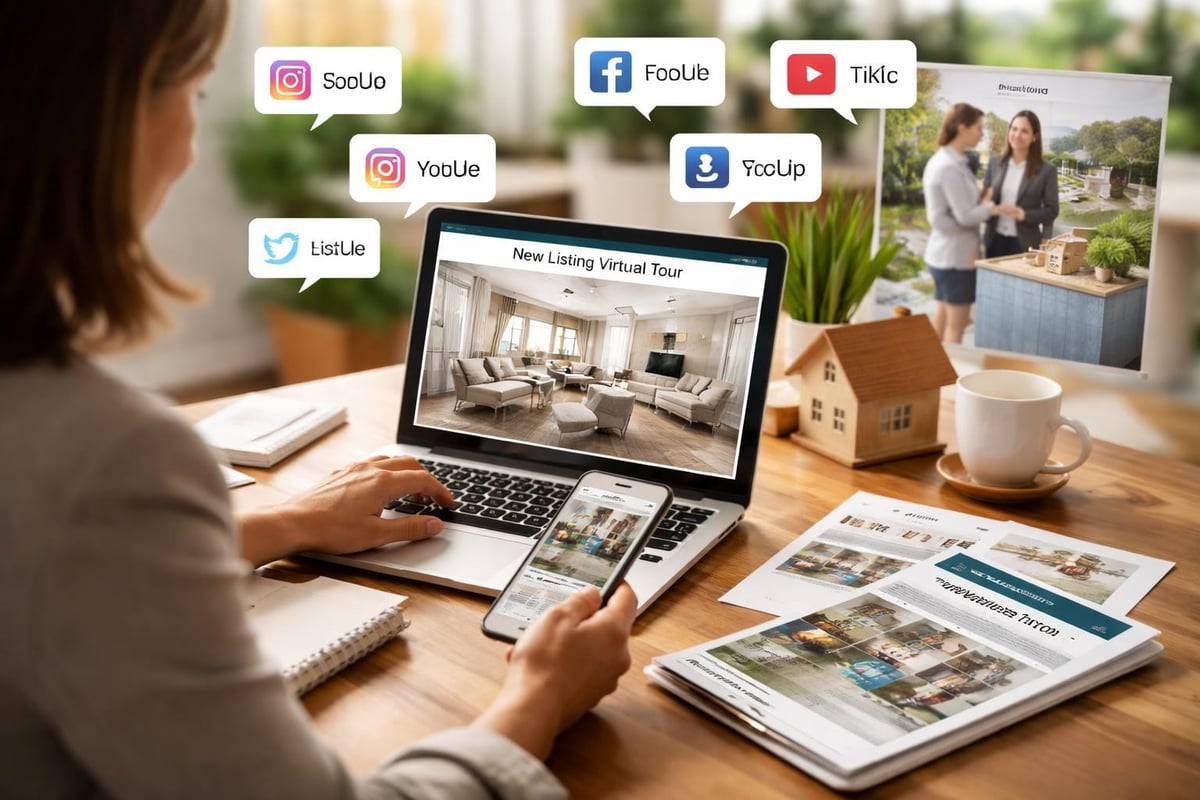
Digital Strategies Shaping Real Estate Marketing
The digital landscape continues to reshape how real estate marketers reach and engage with potential clients. In 2026, short-form video content has become essential for capturing attention and showcasing properties in compelling ways.
Video Content That Converts
Video has emerged as the most powerful tool in a marketer's arsenal. Quick property tours, neighborhood highlights, and market update videos help establish trust and showcase expertise. Real estate marketers who embrace video content are seeing significantly higher engagement rates than those relying solely on static images and text.
These short videos don't need Hollywood production values. Authenticity resonates with audiences, especially when marketers share genuine insights about local communities like Andover, Bel Aire, or Rose Hill. A simple walkthrough highlighting a home's best features or a quick update on market conditions can make a meaningful connection with potential clients.
The Power of Professional Photography
Enhanced marketing services now include professional photography as a standard offering rather than a luxury add-on. High-quality images make properties stand out in crowded online listings and help homes sell faster and for higher prices.
| Marketing Element | Impact on Sale Time | Impact on Sale Price |
|---|---|---|
| Professional Photos | 32% faster | 3-7% higher |
| Virtual Tours | 28% faster | 2-5% higher |
| Drone Footage | 25% faster | 4-8% higher |
| Floor Plans | 18% faster | 1-3% higher |
Professional marketers understand that visual presentation isn't just about making a property look good. It's about helping potential buyers envision themselves in the space and understand the property's full potential. This is particularly important for land and acreage transactions where the possibilities might not be immediately apparent.
Local Market Expertise as a Competitive Advantage
While digital tools are essential, real estate marketers who succeed in specific communities do so because of their deep understanding of local markets. This is where hyper-local content strategies make a significant difference.
Knowledge of neighborhoods, school districts, local businesses, and community events allows marketers to speak authentically about what makes each area special. When working with clients in Goddard or surrounding communities, this local insight becomes invaluable for both buyers seeking the right fit and sellers wanting to highlight their property's unique advantages.
Creating Hyper-Local Content
Real estate marketers are increasingly developing content that speaks directly to specific neighborhoods and communities. This might include:
- Neighborhood spotlight videos showcasing local parks, schools, and amenities
- Market trend reports specific to South Central Kansas communities
- Community event coverage that demonstrates local involvement
- School district comparisons helping families make informed decisions
- Local business features highlighting shopping and dining options
This approach helps marketers establish themselves as community experts rather than just property sellers. When you're looking for a realtor who truly understands your area, local expertise combined with modern marketing techniques creates the ideal partnership.

Building Relationships Through Modern Marketing
Real estate marketers understand that transactions are built on relationships, and modern marketing tools enhance rather than replace personal connections. The most effective marketers use technology to stay in touch, provide value, and demonstrate their commitment to client success.
Client Communication Strategies
Clear, consistent communication has always been a hallmark of successful real estate professionals. Today's marketers leverage multiple channels to keep clients informed and engaged:
- Email campaigns with market updates and new listings
- Text message updates for time-sensitive information
- Social media interactions that maintain ongoing relationships
- Personal phone calls for important discussions and check-ins
This multi-channel approach ensures clients receive information in their preferred format while maintaining the personal touch that builds trust. Real estate marketers who excel at communication often see higher client satisfaction rates and more referral business.
The Referral Network Strategy
Smart marketers recognize that satisfied clients become their best advocates. Building a strong referral network involves more than just asking for referrals. It requires consistently delivering exceptional service and staying connected with past clients long after closing.
Data-Driven Marketing Decisions
The best real estate marketers in 2026 make decisions based on data rather than hunches. They analyze market trends, track campaign performance, and adjust strategies based on what the numbers tell them.
Key Metrics Marketers Track
| Metric | Why It Matters | How It Informs Strategy |
|---|---|---|
| Days on Market | Indicates pricing accuracy | Helps refine pricing strategies |
| Engagement Rates | Shows content effectiveness | Guides content creation decisions |
| Lead Source Analysis | Reveals top channels | Optimizes marketing budget allocation |
| Client Satisfaction Scores | Measures service quality | Identifies improvement opportunities |
| Conversion Rates | Tracks lead quality | Refines targeting approaches |
This analytical approach helps marketers serve clients more effectively. When a property sits on the market longer than average, data helps identify whether pricing, presentation, or targeting needs adjustment.
Market Insights That Matter
Real estate marketers who provide data-driven market insights add tremendous value for their clients. Understanding inventory levels, price trends, and buyer demographics in areas like Wichita and surrounding communities helps both buyers and sellers make informed decisions.
For sellers, these insights inform pricing strategies and timing decisions. For buyers, market data helps identify opportunities and avoid overpaying. Marketers who can clearly communicate this information position themselves as trusted advisors rather than simple transaction facilitators.

Interactive and Immersive Marketing Experiences
The future of real estate marketing includes increasingly interactive content and comprehensive property experiences that help buyers make confident decisions without multiple in-person visits.
Virtual Tours and Digital Open Houses
Virtual tours have evolved from simple 360-degree photos to fully immersive experiences that let potential buyers explore properties at their convenience. Real estate marketers who offer these services provide value to both sellers and out-of-town buyers.
Digital open houses combine live video streaming with interactive features, allowing real estate marketers to showcase properties to multiple potential buyers simultaneously while answering questions in real time. This approach expands reach beyond local buyers and makes the process more convenient for everyone involved.
Interactive Floor Plans and Visualization
Modern marketing goes beyond showing what a property is. It helps buyers visualize what it could become. Interactive floor plans allow potential buyers to explore layouts, understand room dimensions, and even experiment with furniture placement.
For investment properties or land transactions, visualization tools help buyers understand development potential and future possibilities. Real estate marketers who provide these resources help clients make faster, more confident decisions.
Embracing Emerging Marketing Trends
As we move through 2026, real estate marketers are adapting to new trends and technologies. Current real estate marketing trends emphasize digital dominance, enhanced visual presentation, and personalized client experiences.
Single Property Websites
For unique or high-value properties, dedicated websites create a premium marketing experience. These sites showcase a single property with comprehensive information, professional photography, virtual tours, and detailed neighborhood information.
While not necessary for every listing, single property websites demonstrate a marketer's commitment to providing exceptional service and maximum exposure for sellers who choose this approach.
Smart CRM Systems
Customer relationship management tools help real estate marketers stay organized and responsive. Modern CRM systems track interactions, automate follow-ups, and ensure no client or lead falls through the cracks.
These systems also help marketers segment their audiences, sending relevant information to first-time homebuyers, investment property seekers, and land purchasers based on their specific interests and needs.
The Human Element in Digital Marketing
Despite all the technological advances, the most successful real estate marketers never forget that they're working with people making significant life decisions. Buying or selling a home is an emotional journey, and marketers who combine digital efficiency with genuine empathy create the best client experiences.
Personalized Service at Scale
Technology enables real estate marketers to serve more clients without sacrificing personal attention. Automated systems handle routine communications while freeing up time for meaningful one-on-one interactions when they matter most.
This balance is particularly important in communities throughout South Central Kansas, where relationships and reputation form the foundation of successful real estate businesses. Marketers who understand their local markets and genuinely care about their clients' success build practices that thrive for decades.
Marketing Investment Properties and Land
Real estate marketers who work with investors and land buyers approach marketing differently than those focused solely on residential homes. These transactions require different information, targeting strategies, and communication approaches.
Investor-Focused Marketing
Investment property marketing emphasizes financial potential, rental income projections, and market appreciation trends. Successful marketers in this space provide detailed analysis and connect investors with relevant resources, including mortgage lenders who specialize in investment properties.
Land and Acreage Marketing
Marketing land requires helping buyers envision possibilities. Real estate marketers use aerial photography, topographical information, zoning details, and development potential analysis to showcase land opportunities effectively. This specialized knowledge serves clients looking for everything from small acreage for hobby farms to larger parcels for development.
The Importance of Professional Networks
Real estate marketers don't work in isolation. They build relationships with other professionals who enhance the client experience:
- Mortgage lenders who can pre-qualify buyers and offer competitive financing
- Home inspectors who provide thorough property evaluations
- Contractors who can estimate repair costs or renovation potential
- Attorneys who handle complex legal aspects of transactions
- Other real estate professionals who expand referral networks
These connections add value for clients and streamline the buying or selling process. When you work with well-connected real estate marketers, you benefit from their entire professional network.
Measuring Marketing Success
The most effective real estate marketers continuously evaluate their strategies and adjust based on results. They track not just sales numbers but also client satisfaction, marketing reach, and brand recognition within their communities.
Success metrics extend beyond individual transactions to long-term relationship building. Happy clients who refer friends and family, return for future transactions, and leave positive reviews represent the ultimate marketing success.
Adapting to Changing Markets
Markets shift, and successful real estate marketers adapt their strategies accordingly. Whether navigating a seller's market with limited inventory or a buyer's market with abundant choices, flexibility and market awareness separate top performers from the rest.
In South Central Kansas communities, understanding seasonal patterns, economic factors, and local development plans helps marketers guide clients to make smart decisions regardless of current market conditions.
Modern real estate marketers combine digital innovation with local expertise and genuine client care to deliver exceptional results. Whether you're buying your first home, selling an investment property, or exploring land opportunities in South Central Kansas, working with a marketer who understands both technology and personal service makes all the difference. Diana Burress and the team at B Realty, LLC bring over a decade of local experience, professional marketing services, and a client-centered approach to every transaction. Ready to experience the difference personalized, professional real estate marketing can make? Let's start a conversation about your real estate goals today.